
AISIA Template for ISO/IEC 42005 & 42001
The ISO/IEC 42005 AI System Impact Assessment Template is an Excel-based workbook created to help organizations perform, document, review, and maintain AI system impact assessments in a structured and repeatable way. It is built to support organizations that want to assess how an AI system can affect individuals, groups of individuals, and society, while also aligning their process with the broader requirements of an AI management system under ISO/IEC 42001, including the need to perform AI system impact assessments at planned intervals or when significant changes are proposed.
This template turns the guidance of ISO/IEC 42005 into a usable working tool. ISO describes AI system impact assessments as a way to identify, evaluate, and document the potential impacts of AI systems and their foreseeable applications throughout the AI system lifecycle, supporting transparency, accountability, and trust. The workbook is designed to make that process operational for real organizations and real consulting projects.
Purpose of the Template
This template is for organizations that need a clear and consistent way to assess the impacts of AI systems before deployment, during operation, and whenever significant changes occur. It helps teams move beyond informal discussions and into a documented assessment process that can be repeated across multiple AI systems, business units, or client environments.
It is especially useful where an organization wants to:
- establish a formal AI system impact assessment process
- document scope, stakeholders, intended uses, foreseeable misuse, and failure scenarios
- assess impacts across areas such as accountability, transparency, fairness, privacy, reliability, safety, explainability, and environmental considerations
- define measures to address harms and support beneficial outcomes
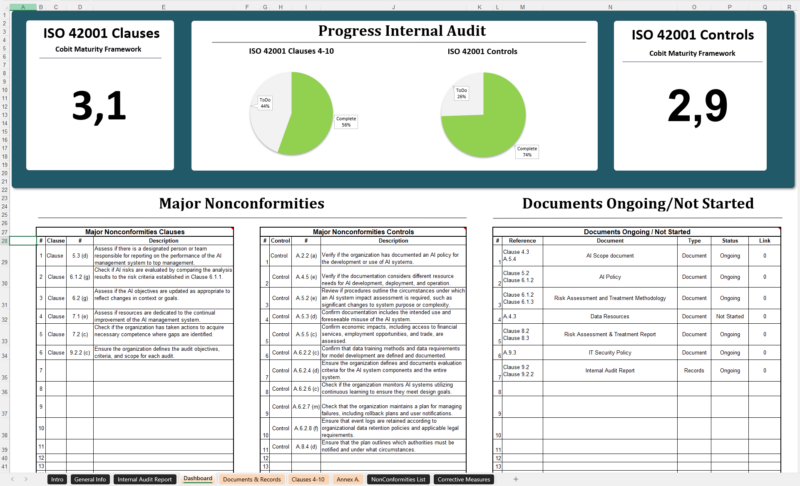
- maintain evidence for management review, governance, and audit purposes
Scope of the Template
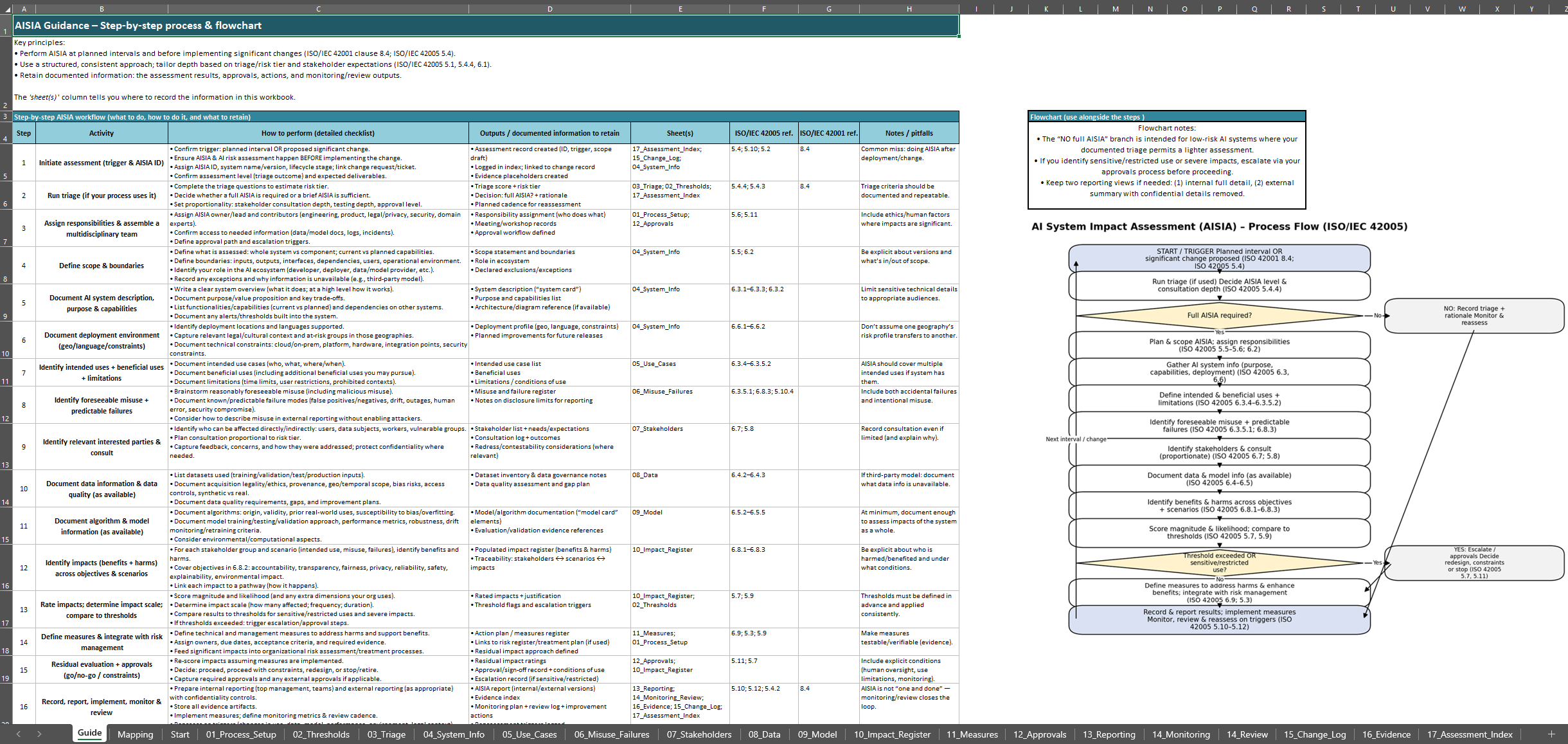
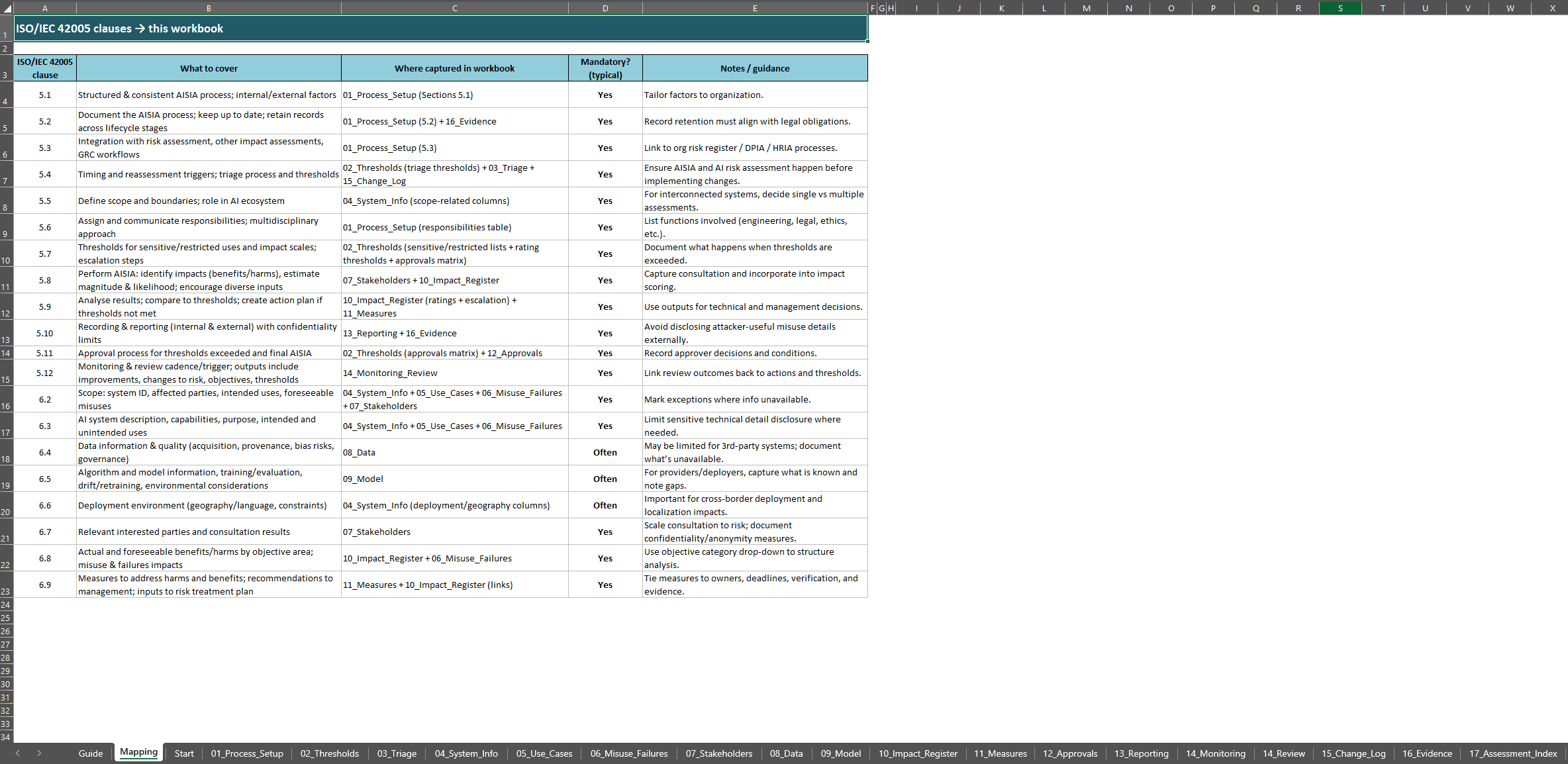
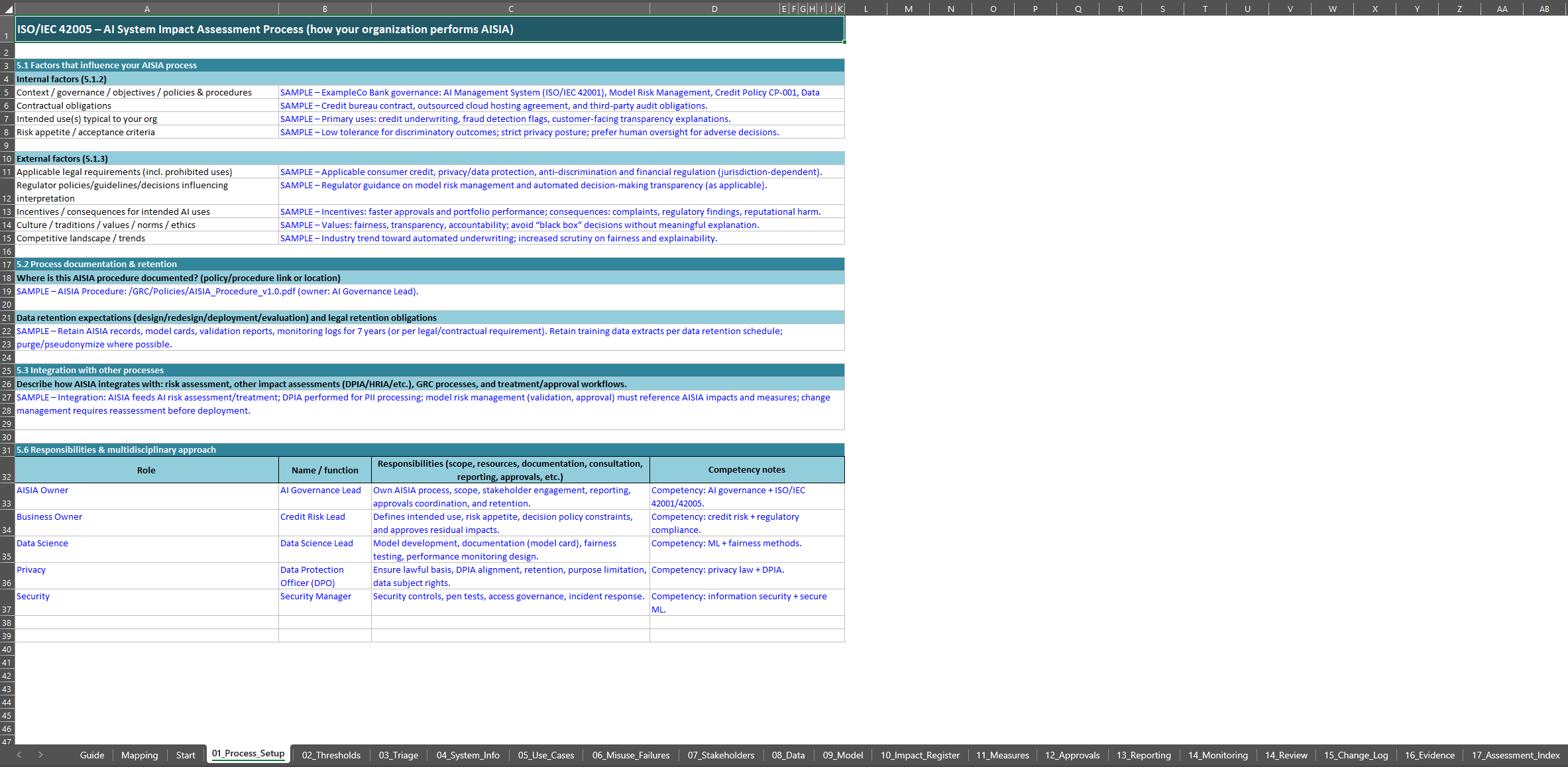
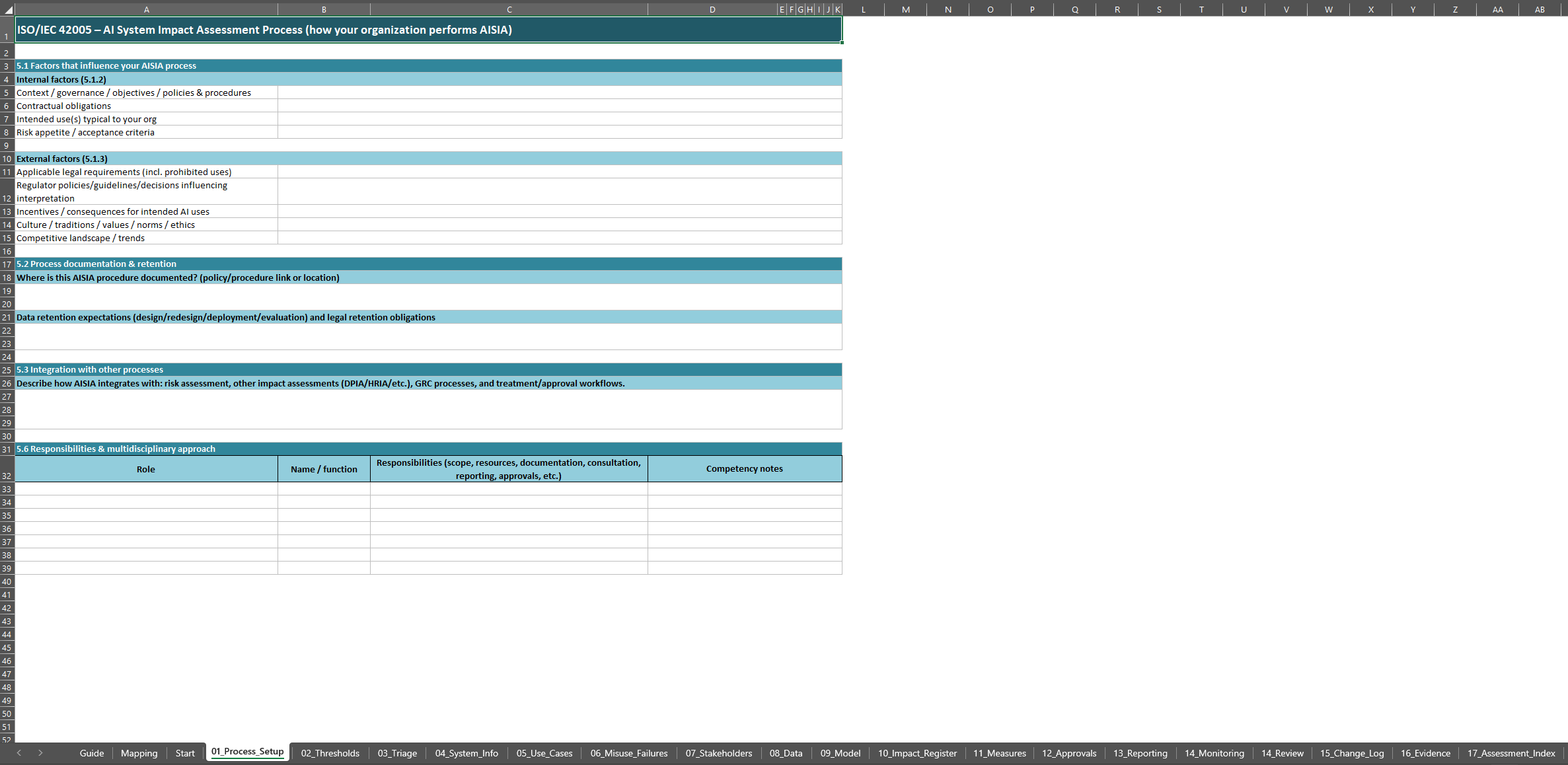
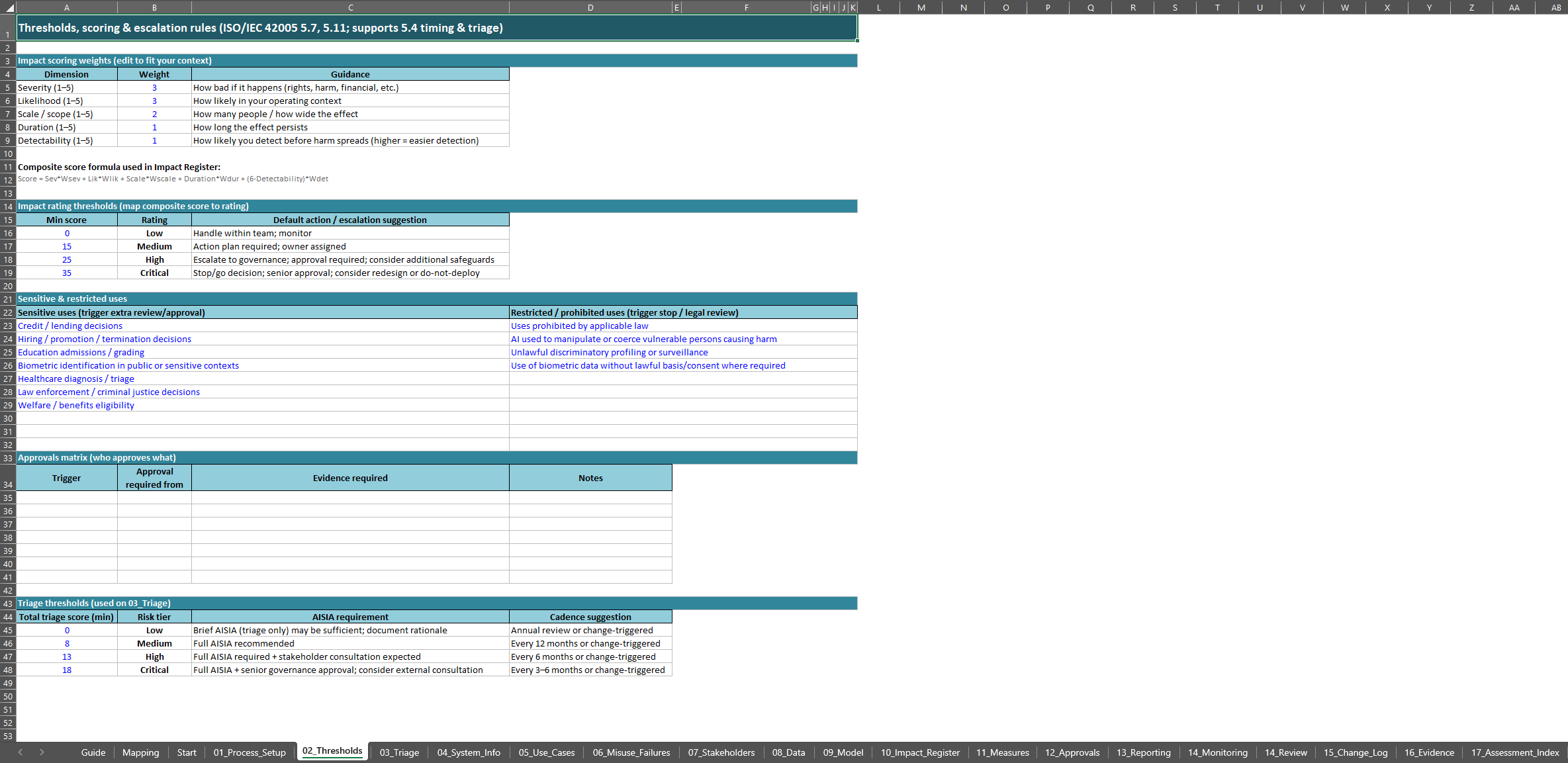
The workbook is structured to cover the full impact assessment lifecycle, from process definition through monitoring and review. It includes sheets for process setup, thresholds, triage, system information, use cases, misuse and failure analysis, stakeholder identification, consultation, data and model information, impact scoring, measures, approvals, reporting, monitoring, review, change management, and evidence logging.
In practical terms, the template helps document:
- the AI system under assessment
- its purpose, capabilities, intended uses, and reasonably foreseeable misuses
- the people and groups who can be affected
- the data, models, algorithms, and deployment environment
- the benefits and harms that can reasonably be expected
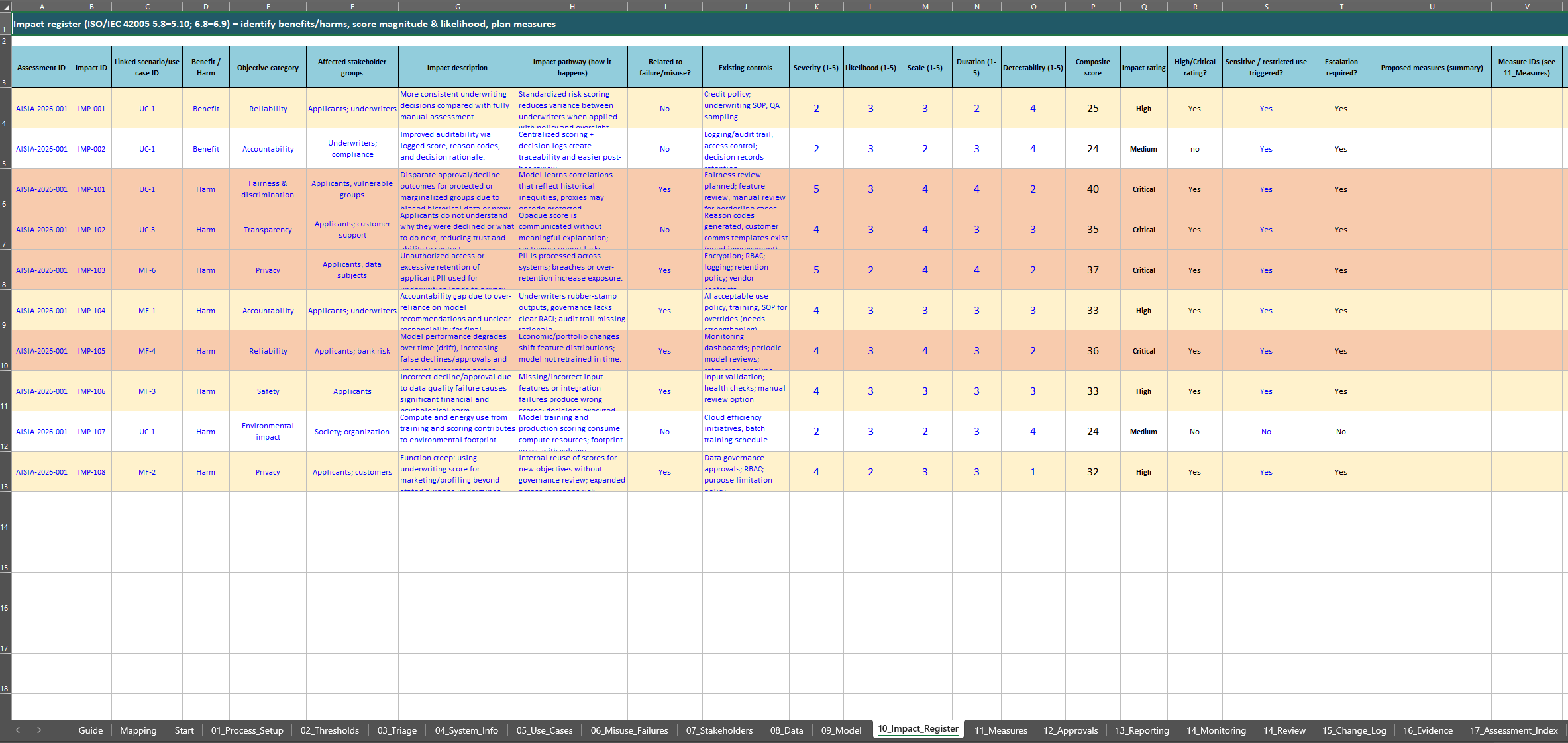
- the magnitude and likelihood of those impacts
- the actions, controls, approvals, and follow-up activities required
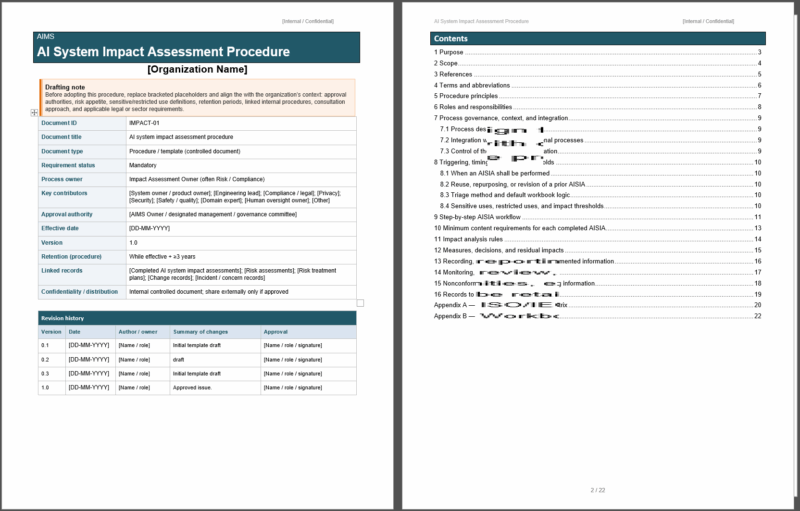
That structure reflects the core themes of ISO/IEC 42005, which focuses on developing and documenting an AI system impact assessment process, integrating it with other governance and risk processes, deciding when assessments are needed, defining scope and responsibilities, establishing thresholds, performing the assessment, analyzing results, recording and reporting outcomes, and monitoring and reviewing the process over time.
Template Value
Many organizations understand that they need to assess AI impacts, but they struggle to translate standards language into a usable internal process. This template solves that problem by giving you a practical structure that can be filled in step by step.
It is useful because it helps bring consistency to AI governance work. Instead of each project team inventing its own approach, the organization can use one repeatable workbook and one documented method. That makes assessments easier to compare, easier to review, and easier to improve over time.
It is also useful because it supports cross-functional collaboration. AI system impact assessments are not just technical exercises. They often require input from governance, legal, privacy, security, product, compliance, operations, and business stakeholders. This template provides one place to collect and organize that information in a way that is understandable and reviewable.
Another key benefit is reusability. The template is designed so that it can be used again and again across different organizations and AI systems. That makes it valuable not only for internal teams, but also for consultants who need a reliable assessment structure they can adapt for multiple clients.
User Groups and Applicability
This template is useful for a wide range of roles involved in AI governance, risk, compliance, and implementation, including:
- AI governance leads
- ISO/IEC 42001 implementation teams
- consultants supporting AI management system projects
- risk and compliance managers
- privacy and legal teams
- product and innovation teams deploying AI solutions
- internal auditors and management reviewers
- organizations preparing for more formal AI governance or certification-related readiness activities
It is especially helpful for consultants and advisors because it can act as both a working assessment tool and a repeatable consulting deliverable. You can tailor it for one client, then reuse the same framework for another organization while keeping a consistent methodology.
Template usage Guidance
The workbook is designed to follow a logical assessment process.
- First, the organization defines its overall process, responsibilities, thresholds, and triage logic. This establishes when a full AI system impact assessment is needed and how decisions will be reviewed and approved.
- Next, the assessor documents the AI system itself: what it does, why it is used, how it works at a high level, what data and models are involved, where it is deployed, and who can be affected.
- After that, the assessment identifies intended uses, beneficial uses, foreseeable misuse, and possible failures. Stakeholders are mapped, consultations can be recorded, and impacts are analyzed across key categories such as fairness, privacy, safety, reliability, transparency, and explainability.
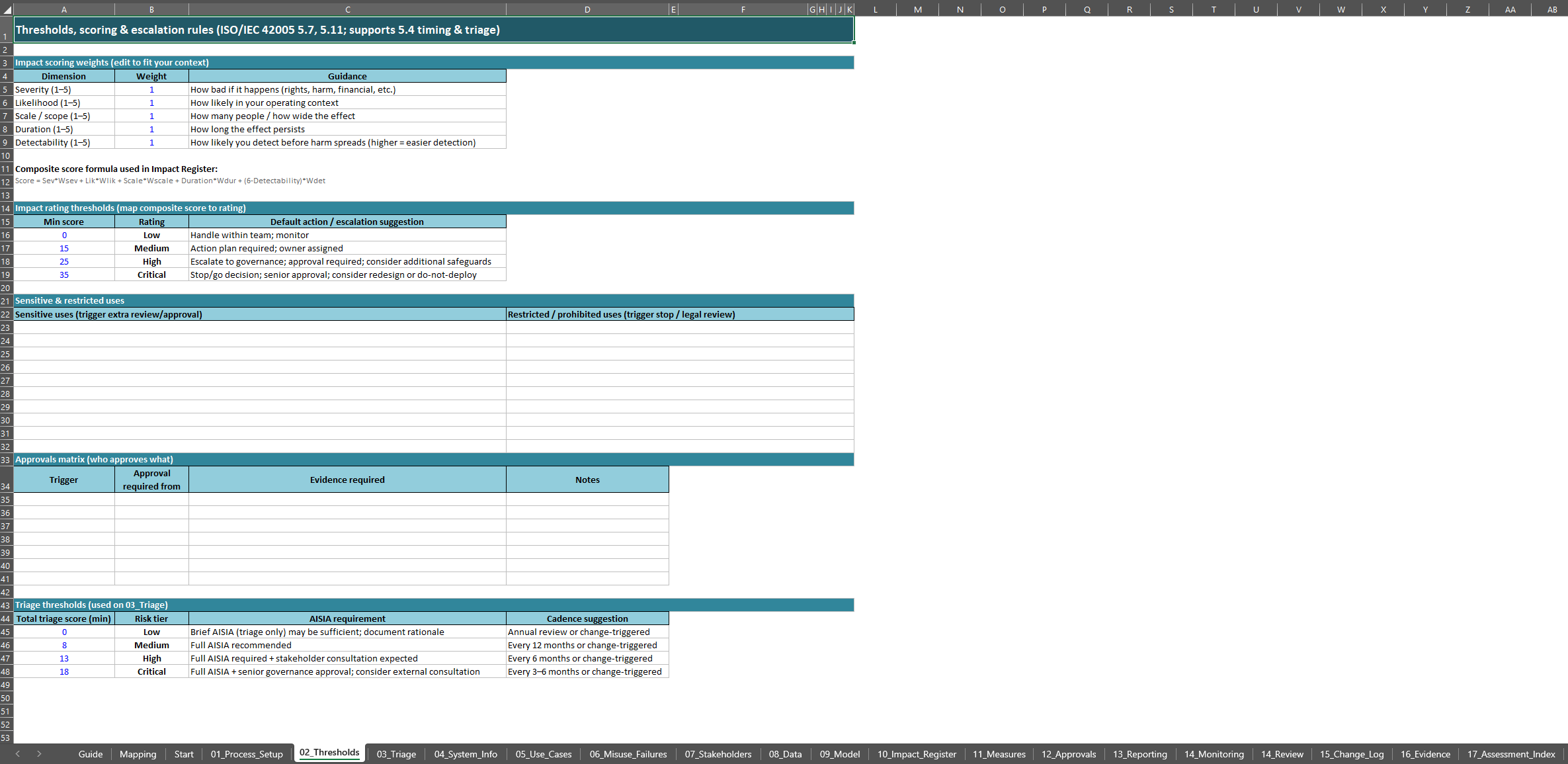
- Once the impacts are identified, the template supports scoring, prioritization, and threshold checks. This helps determine whether the AI system falls into a sensitive or restricted category, whether escalation is required, and which treatment measures or approvals are needed.
- Finally, the workbook helps document mitigations, management actions, reporting, monitoring, review, reassessment triggers, and retained evidence. This gives the organization a fuller picture of how the AI system is governed over time rather than treating the assessment as a one-time exercise.
Distinguishing Features
This is not just a simple checklist. It is a structured workbook designed to function as an assessment tool, governance record, and reusable implementation asset.
It is detailed enough for serious consulting and governance work, but still practical enough to use in Excel. It can be tailored to a single organization’s context, risk appetite, policies, and approval workflows, while still keeping the underlying structure consistent.
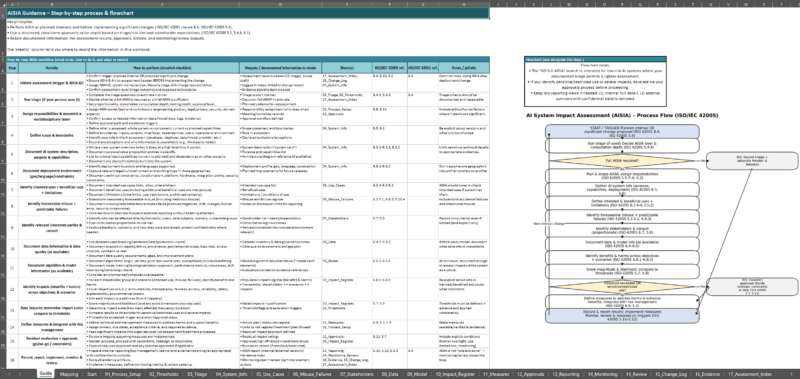
It is also built for visibility. The included guidance and process flow make it easier for different stakeholders to understand where they fit into the assessment process and what information is expected from them.
A practical template for responsible AI governance
Organizations increasingly need a reliable way to show that they have thought through how their AI systems can affect people and society, not just whether the technology works. ISO/IEC 42005 was created to guide that effort, and ISO/IEC 42001 places AI system impact assessments within the wider AI management system framework. This template helps turn those expectations into a practical, repeatable, and consultant-friendly Excel tool.
Reviews
There are no reviews yet.